|
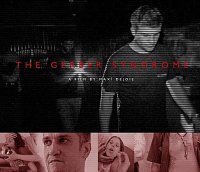
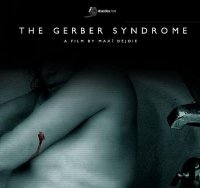
Your new film The Gerber Syndrome
- in a few words, what is it about?
In a few words: The Gerber Syndrome
is about a very
serious disease and about how everyday people deal with it.
Even if the infected in your film are technically not
zombies, The Gerber Syndrome
will almost certainly be labelled a zombie movie. Does this at all bother
you, and were you at all inspired by zombie cinema? I have to say that i am a big zombie lover, so
I wouldn't really be bothered by that. That said, I didn't really want The Gerber Syndrome
to be a Zombie film. That is because i’d prefer the audience to consider
it a more realistic film rather than a complete piece of fiction.
You
approach your subject matter in the guise of an old school (if fake)
documentary. What inspired you to go that route? I thought it would
be way easier for the audience to
believe in the film and to sympathize with the characters if I showed them something they could actually see on TV, like on
Discovery
Channel or National Geographic. Nowadays people seem to think:
If TV says
it, then it must be true. So my final purpose is to lead people to ask
themselves: What would I do if that happen to me?
Other
sources of inspiration for The Gerber Syndrome?
I watched lots and lots of real documentaries, to grasp that
particular visual style and technique. On the fiction side, I really
appreciated a British mockumentary called Death Of A President. That was
one of the few mockumentaries made in a similar way as I thought The Gerber Syndrome
should have been.
The titular "Gerber Syndrome" is of course just
fiction, but how much of the syndrome is based on scientific fact? The story is basically fiction. But the major part of elements
that compose it are taken from real events. Even the disease is a
“collage” of symptomes taken from several different diseases like
Meningitis, Encephalitis, Malaria or Syphilis. During pre-production I worked a lot with two doctors specialized in infective diseases
who showed
me how to make this look as real as possible, and they also showed me how
often reality is way worse than most horror films.
Luigi Piluso |
A
few words about your principal cast?
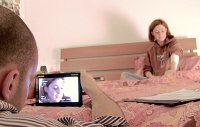
My cast was divided between professional actors and real people.
Melissa, her parents and the Doctor, played by Valentina Bartolo,
Sax Nicosia, Pia Lanciotti and Beppe Rosso, are all professional and very
talented actors, with important careers in theatre and TV.
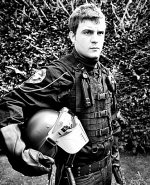
Luigi Piluso,
who is Luigi in the film, was a great surprise. He never acted before, and he
showed us his great ability in
looking believable and perfectly fitting the role.
From what can be
seen in The Gerber Syndrome,
you worked with a very skeletal crew. What can you tell us about your crew
and the on-set atmosphere?
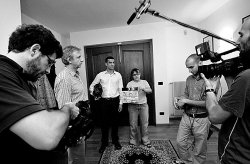
Compared to the crew of an average film, even if low budget, our
crew was very small indeed. We never had more than 10 people on set. On
the technical side I prefered to have people with a reportage and
documentary background, because I thought they would better capture
the essence of reality that I was looking for the film.
In fact the cinematographer, Stefano Rogliatti, and the second
camera operator Renato de Gaetano, are mainly TV cameramen.
Some days, when we shot the interior scenes with Melissa for
example, the atmosphere was quite serious and dramatic. We all felt
involved in the charachter’s drama, as if we were about to film real
events.
Some other days, the situation was more relaxed, and we could
even have a laugh now and then. Especially the scenes with lots of extras,
those were quite fun.
I really liked the exteriors
of the Security Center, so you just have to talk about that building for a
bit! We have been very lucky with that location! We were
looking for the right place, and we couldn’t find a location. I was
quite desperate because that was a very important scene; and one day Sara
Montironi, our production manager invited us to see this place, because
her mother was working there. That was the central building from the
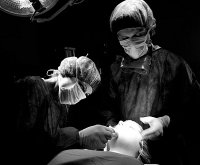
Veterinary faculty of the University of Torino. Somehow she got us the
necessary permits to shoot there, and it was amazing. We had the freedom
of going pretty much everywhere, trough this fantastic surgery rooms, some
of them oversized because they are destined to horses and cows. So it
really felt like being into a hospital, and I think the audience has the
same feeling while watching the film.
Speaking of the Security Center: Am I the only one
who senses a certain scepticism towards authority in your depiction of the
organisation? And would you at all want your film to be understood as a
political film?
When writing the script I decided that I would show some
stuff, some real stuff. And you don’t have to look far away to find my
referencis, you just have to read some newspaper from 2009 or 2010.
In recent years, there has been a big talk concerning viruses,
diseases, epidemics, even pandemics sometimes. Sometimes real, sometimes
not so real.
I thought that at the beginning of the last decade, after 9/11,
people’s big fear was terrorism. That was “the monster”. Now, I think people’s big fear is way way smaller than a terrorist, the new
monsters are viruses, bacterias, infections and so on. And I think that
these are much scarier than zombies, vampires or mummies.
There are definitely lots of wrong things going on
concerning the management of people’s health. Huge business are made
every single day on the back of people who are suffering.
You hear about things you can’t believe, stuff that look like
some sci-fi movie, that makes you wonder “is this Orwell’s 1984 or
real life?”.
So, my biggest hope is that my film might be able to make people
think about some topics. To make them say “I wanna know more about this,
I want to learn what’s going on”.
Nowadays we can learn what is going on. Just go on the internet,
maybe you won’t find the absolute truth, but at least you will know a
little bit more. And this way next time your government, your doctor or a
pharmaceutical industry will try to fool you about your health, you might
be able to say NO! SCREW YOU!
Let's go all the way back to your
beginnings: What made you go into filmmaking in the first place, and did
you receive any formal training on the subject?
Filmmaking was my main and only big passion since I was six or
seven years old. That is when I started making small short films with my
friends, mostly adventure and 007 kinda stories. Then
I kept on doing
short films, untill I started making them better and presenting them to
film festivals. That led me to meet Claudio Bronzo when I was sixteen, he
was my first producer, the first who believed in me. And after four short
films and a stage play together he is now the producer of The Gerber Syndrome. I’ve
studied acting for five years, and photography for two years after high
school, but I never did study filmmaking, I’m completely self-thaught.
I have been very lucky to have had the chance of working as editor and
cameraman since I was quite young, and I learned a lot from the
professionals i worked with. As far
as I know, The Gerber Syndrome
is your first feature film, but you have made quite a few shorts that have
won you some international acclaim. Would you like to talk about those for
a bit? I did make some shorts yes. Most of them were
self-produced, with just my money or sometimes my parents’. That was
the only way I could express myself, the only way I could tell the stories
I wanted to tell. In the last years, things got a little bit more serious,
having someone else that finacially backed up my projects. The bad thing
about short films is that nowadays there is no market for them, there is
virtually no way to gain any money with them. At least from my own
experience. So I don’t know many people that are still willing to invest
money in short films. That is a shame indeed.
After your shorts, what made you take the plunge
and go into feature filmmaking? After Warming Safari, my last short film,
I felt I needed to do a further step. I wanted to do something that could really
push my career into a more commercial circuit. With short films the only
thing you can hope for is to get into film festivals. So far, most of your
films are horror movies in one way or another. Is that a genre especially
dear to you, and why? Not exactly. Actually I only did one horror short film.
All my other shorts are mostly Sci-Fi. And even The Gerber Syndrome,
I don’t really feel it as a horror film. I watch lots of horror films, but
it’s not exactly my favourite genre. I like horrors when they have
something to say. If it’s just a thrill show, I don’t really care. Any future projects you'd like to
talk about? I’m currently working a new feature screenplay, with
a very talented writer called Alessandro Mello. It has nothing to do with
horror, nor Sci-Fi. It’s a very difficult and dramatic topic, but I really like
it and I’m enjoying working on it. You also work for M&N Productions,
a company whose usual output couldn't be further removed from horror. Why
don't you talk about that company for a bit?
M&N Productions has nothing to do with horror... It’s a TV
production company specialized in marine documentaries. So, sailing, diving,
motor boats and stuff. I started working there several years ago as
cameraman, then editor, and now I’m in charge of the whole
post-production department. It’s a great place to work, and I’m very
satisfied with what I do there.
And I was very happy when they decided to co-produce The Gerber Syndrome
with
Indastria Film.
Directors who inspire you?
I really like the work of “new” directors like Mark Romanek,
Brad Anderson, Chris Cunningham, Danny Boyle sometimes. And of course the
classics, Scorsese (when he was young), Jim Jarmush, Romero, might sound
obvious, but Kubrick above all. I can’t deny it.
I have a crush on Scandinavian films, especially Norwegian. Some
new Norwegian films like Dead Snow, Troll Hunter, Norwegian
Ninja. They
are ingenious. I love their style.
I also like some new German films and directors: films like Downfall,
The Life Of Others, Die Welle, Invasion (American film,
German
director, I thought it was brilliant).
Your favourite movies?
 |
Feeling lucky?
Want to
search
any of my partnershops yourself
for more, better results?
(commissions earned) |
The links below
will take you
just there!!!
|
|
 |
Taxi Driver, Barry
Lyndon, The Shining, Amadeus, Doctor Strangelove,
American Graffiti, One Flew Over the Cuckoo’s Nest, Monsters,
Inc...
More recently I really liked District 9, Battle LA, Let The Right One In
(the Swedish one), and I could go on for long...
... and of course, films you really deplore?
Well. I usually try to watch anything, but I really like don’t
like the Twilight-series. Because it looks
ugly and fake. I was surprised because it’s not well made, considering the budget of those films.
Recently I didn’t like Super, and
Cowboys & Aliens really bored me.
I’m afraid I don’t like most Italian films. We can only see very
stupid comedies or very boring social dramas. And that’s 90% of our
production.
Your website, Facebook, whatever else?
I used to have a website, but don’t anymore. It was too
complicated.
I have a vimeo page: www.vimeo.com/maxidejoie and there
are the Gerber Syndrome
official pages: www.facebook.com/thegerbersyndrome
and www.thegerbersyndrome.com.
Anything else you are dying to mention and I have merely
forgotten to ask? I guess that’s it folks!
Thanks for the interview!
|




 amazon.com
 amazon.co.uk
 amazon.de
 eThaiCD.com
 find Maxì Dejoie at adultvideouniverse.com